
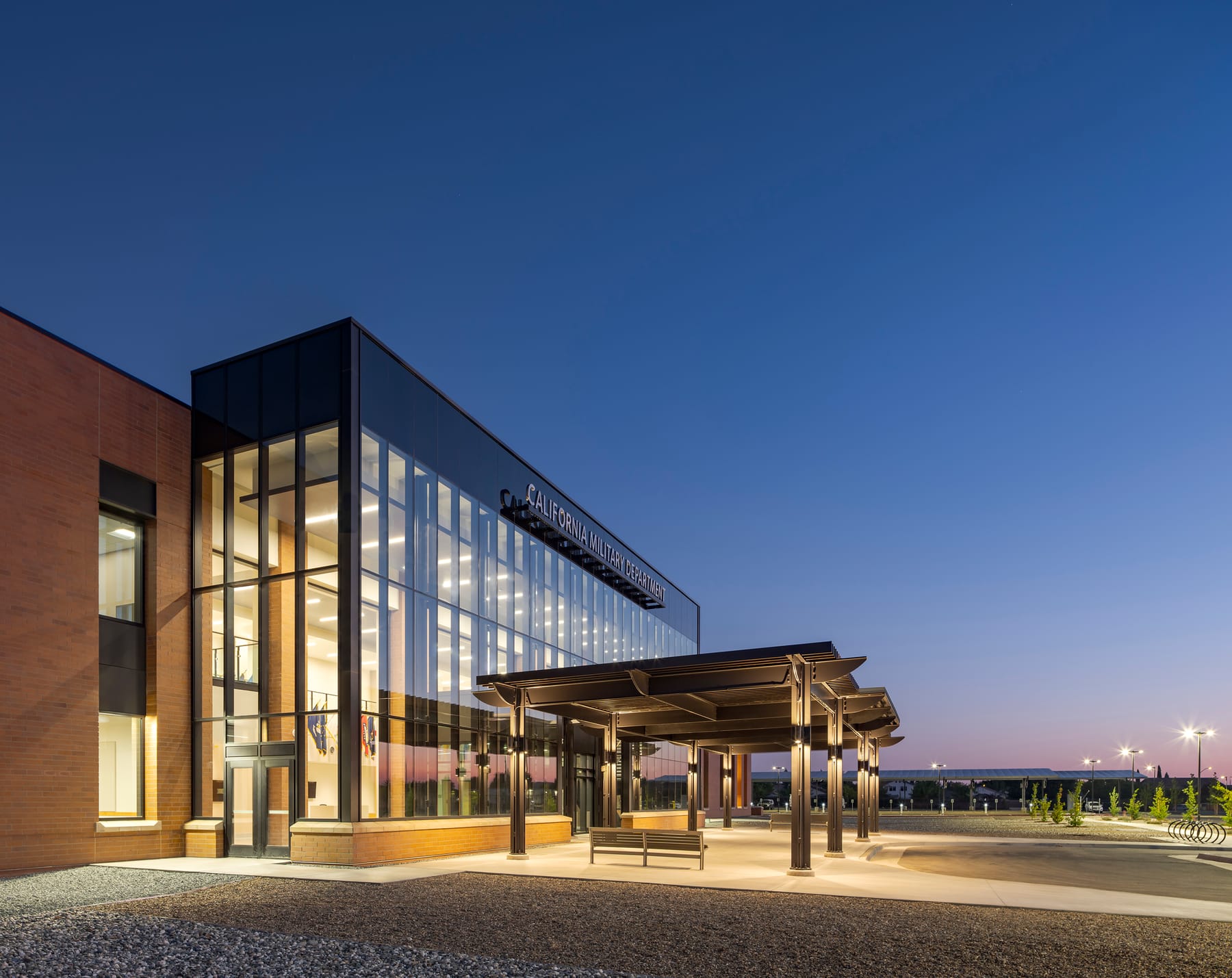
Consolidated Headquarters Complex for the California Military Department (CMD)
Stantec Architecture Inc · Rancho Cordova, CA
Overview
Consolidated Headquarters Complex for the California Military Department (CMD) is one of the first large-scale new Zero Net Energy (ZNE) projects implemented by the state. It consolidates operations of 38 departments into a single 31-acre site. The design aesthetic is contemporary and visually pleasing, fitting within the context of the adjacent neighborhood. In partnership with the general contractor, energy usage was considered from inception, allowing for greater design accuracy, system efficiencies, and higher performance.
The Consolidated Headquarters Complex for the California Military Department (CMD) is one of the first large-scale new Zero Net Energy (ZNE) projects implemented by the State of California. The project consolidates operations of 38 departments into a single 31-acre site. From the project’s inception, every aspect of the project was viewed " under the ZNE lens,” weighing all decisions based on sustainability and energy usage. The design aesthetic befits the facility’s stature as a military headquarters, composed of well-articulated facades with a combination of brick veneer, metal panels, and fenestrations. Façade designs are specific to building orientation and aid with daylight harvesting and net zero energy goals. Sustainability features include on-site photovoltaic arrays that also provide shade for parking areas and reduce the heat island effect. Adorned with native drought-resistant landscaping, the site also includes an Amphitheater and outdoor dining spaces, encouraging outdoor gatherings and promoting occupant health and well-being. The interior was designed to be the change the military department desired. It features open stairs and wide corridors that divide the large square footage and lead to a central two-story open space. Open offices are strategically placed at the perimeter to maximize natural light. Radiant heating and cooling in-slab was installed for occupant comfort and efficiency. Resilient, low-emitting materials and furniture were employed to reduce life cycle costs and enhance occupant satisfaction and productivity.
Gallery